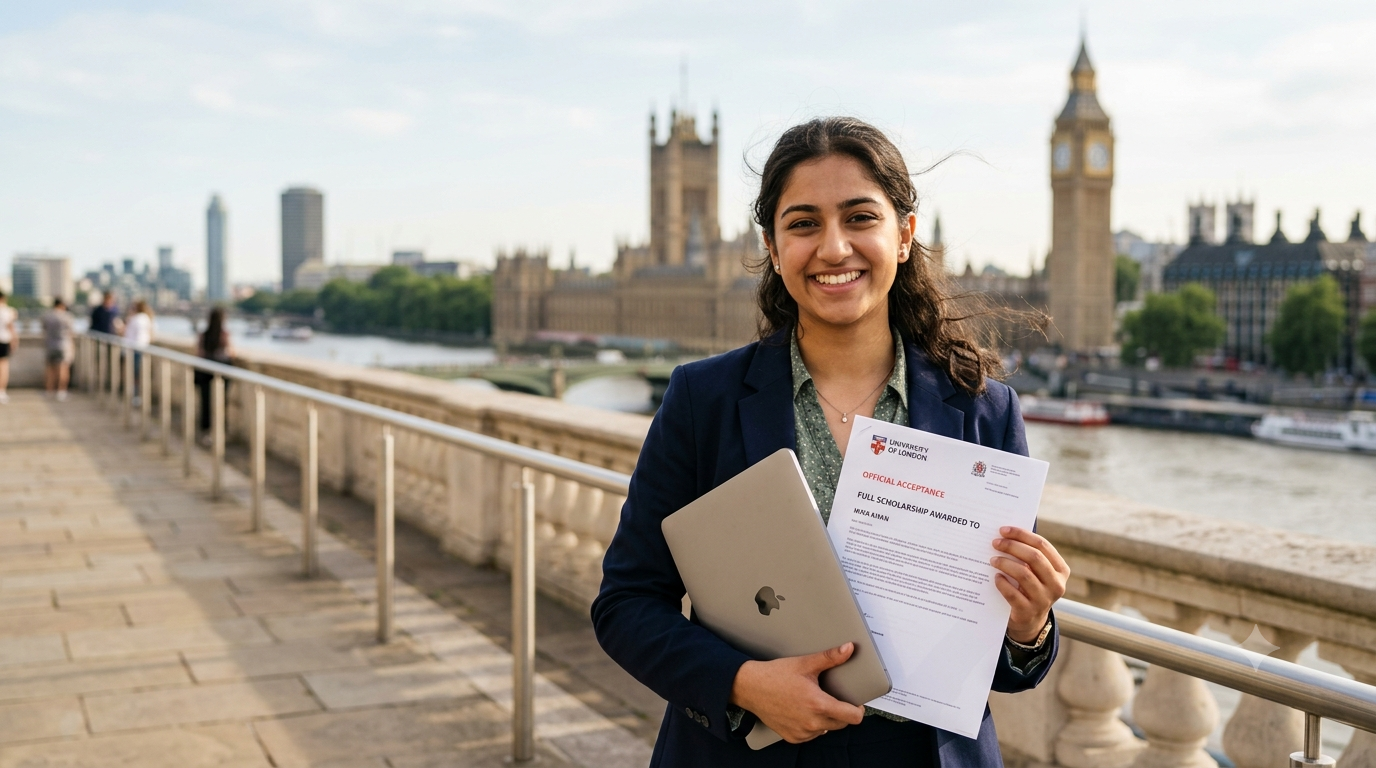
Chevening Scholarship 2027: The Complete Guide (And Yes, You Can Actually Get This)
Everything you need to apply for one of the UK’s most competitive — and most fundable — scholarships, explained the way a friend who already did the paperwork would explain it.
Let’s start with the obvious question: is a fully funded master’s degree in the UK actually realistic for you? Short answer — more realistic than you probably think. The Chevening Scholarship is the UK government’s flagship international award, and it hands full funding to around 1,800 students a year from more than 160 countries, Pakistan included. No “partial funding” fine print, no hidden tuition gap. Tuition, living costs, flights — covered.
The 2027–28 cycle opens soon. This guide walks you through who actually qualifies, what the money covers, the real timeline, the documents to start collecting now, how to write essays that don’t sound like everyone else’s, and the small mistakes that quietly sink strong applications every single year.
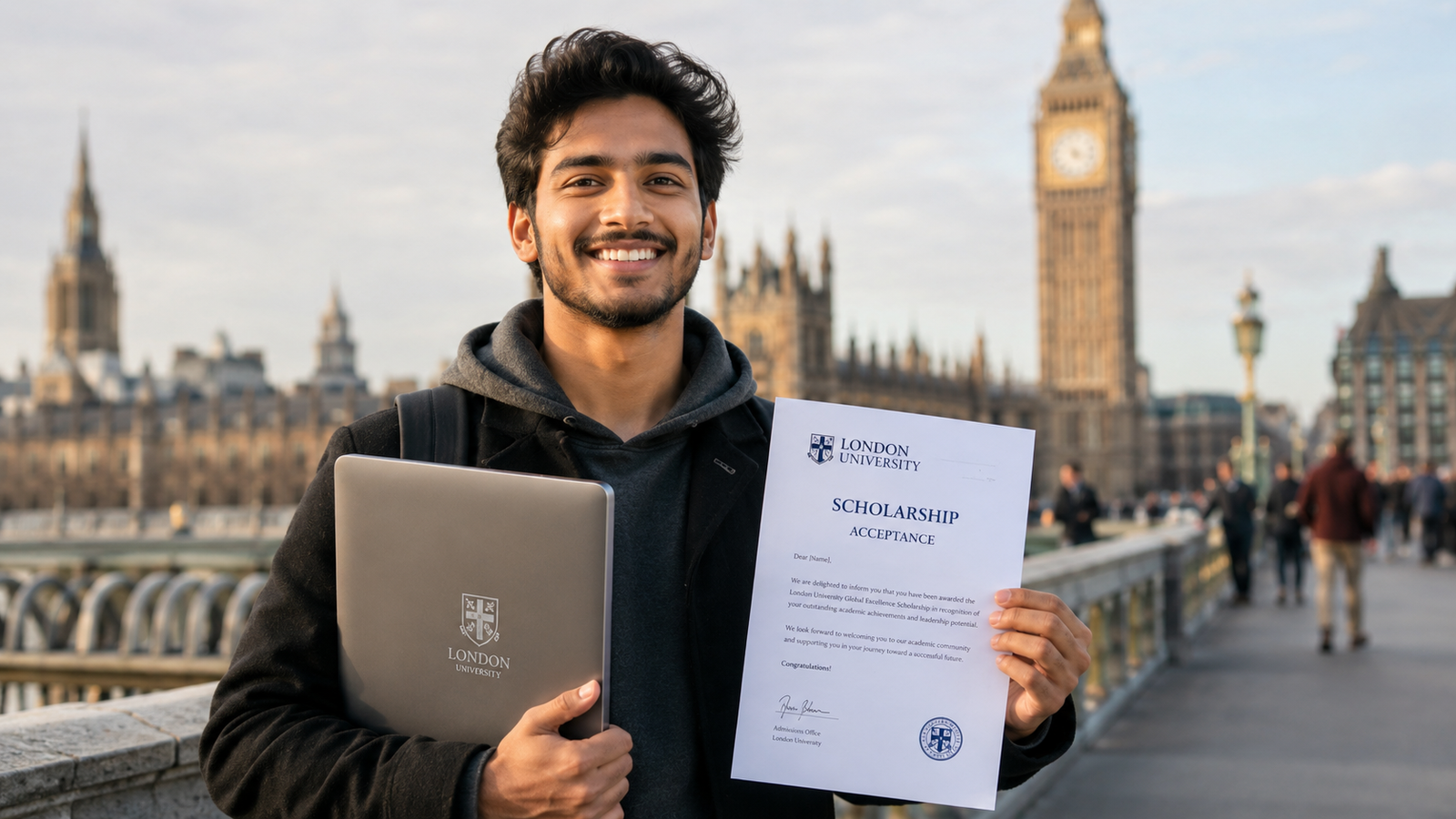
What Is the Chevening Scholarship?
Chevening is funded by the UK’s Foreign, Commonwealth & Development Office — think of it as the UK investing in future leaders before they become leaders. That’s really the whole philosophy behind selection: this isn’t a scholarship for whoever has the highest GPA in the room. It’s for people who can already point to a moment where they influenced a team, a project, or a community, and now want a UK master’s to sharpen that trajectory.
What It Actually Covers
- Full university tuition fees
- A monthly living stipend
- Return economy airfare to and from the UK
- An arrival allowance
- A homeward departure allowance
- The cost of one UK visa application
- A travel grant to attend official Chevening events during your stay
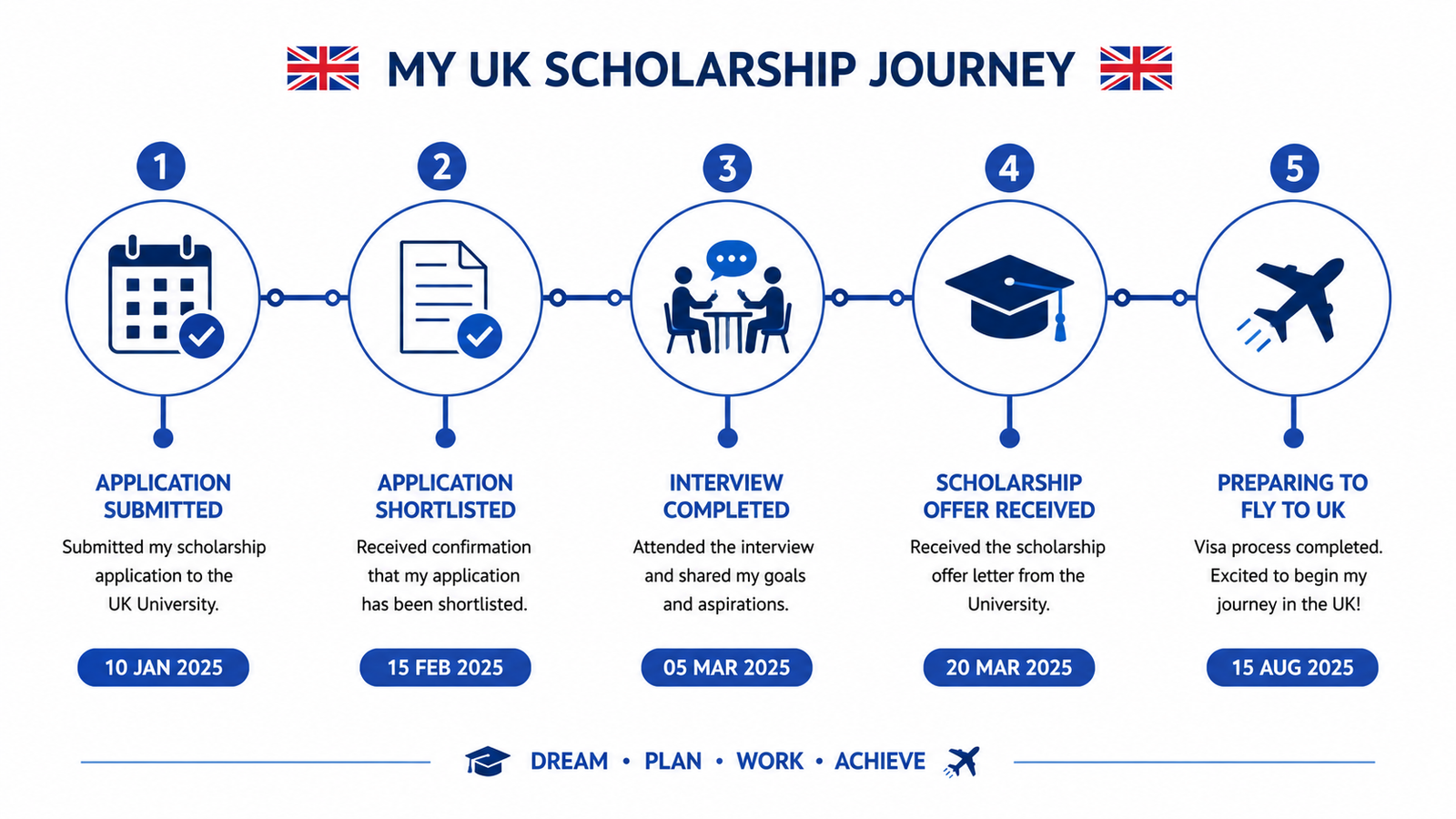
Chevening Scholarship 2027 — Key Dates
Put these in your phone right now — not on a sticky note you’ll lose by September.
11:00 UTC
Dates follow Chevening’s usual annual pattern — always confirm the exact ones on chevening.org once officially announced.
Who Can Apply? (Eligibility Checklist)
Before you get excited about the UK skyline photos on Chevening’s Instagram, check you tick every box below. All of them — this isn’t a “meet most of these” situation.
- You’re a citizen of a Chevening-eligible country (Pakistan is included)
- You have at least 2 years (2,800 hours) of work experience — full-time, part-time, internships, or volunteering combined
- You hold an undergraduate degree that qualifies you for UK master’s entry (typically equivalent to a 2:1 honours degree)
- You completed your undergraduate degree at least two years before the deadline
- You’re willing to return to your home country for at least two years after the scholarship ends
- You don’t currently hold British or dual British citizenship
What Chevening Is Really Looking For
Here’s the part almost nobody explains clearly: meeting the minimum requirements does not get you shortlisted. Chevening scores every application against four things, and your essays need to hit all four, not just the one you’re most comfortable writing about.
Leadership
A specific moment you influenced a team, project, or community — not a general claim.
Networking
How you’ve built and actually used professional relationships to get something done.
Study Proposal
Why this exact course, this university, and why now — not “the UK is a great place to study.”
Career Plan
What you’ll do straight after Chevening, and how it feeds back into your home country.
Documents You’ll Need
Start collecting these weeks before the portal even opens — not the night before the deadline, when your referee suddenly isn’t replying to WhatsApp.
- Passport-style photo and a valid passport copy
- Degree certificate and official transcripts
- Two references — ideally one professional, one academic. Give referees at least 4–6 weeks’ notice
- Proof of work experience (offer letters, employment certificates, or equivalent)
- English proficiency scores if your target universities require them (IELTS/TOEFL)
- Four short essays (more on these next)
The Four Chevening Essays
Every applicant writes four essays, each under a strict word limit — usually around 500 words. They cover leadership, networking, why you want to study in the UK, and your career plan (the same four pillars from above, just in written form).
Writing Tip: Use the STAR Method
For the leadership and networking essays, structure your answer as Situation, Task, Action, Result. Reviewers read thousands of these applications — a line like “I am a natural leader” gets skipped in two seconds. A specific story with a measurable outcome is what actually gets remembered.
Step-by-Step: How to Apply
Pick UK master’s programs across one or more universities that logically connect to your career plan — not just prestigious names.
It opens in August 2026 — set a reminder now.
This part is mostly admin — save your energy for the essays.
Give yourself weeks, not days, and get at least one honest second opinion.
The portal slows down near the deadline — submit at least 48 hours early.
Chevening doesn’t handle admissions — that’s a parallel process you manage yourself.
Usually held at British embassies/high commissions in early-to-mid 2027.
Needed by around July 2027 to keep your scholarship active.

Common Mistakes That Get Applications Rejected
- Choosing courses that don’t match your stated career plan
- Falling short of the 2,800-hour work experience threshold
- Giving referees too little notice, causing missed deadlines
- Letting English test scores expire
- Assuming Chevening applies to universities for you (it doesn’t)
- Writing generic essays with no specific examples or outcomes
- Submitting in the final few hours instead of days early
Should You Apply?
Chevening’s global acceptance rate sits around 2–3%, so yes, it’s genuinely competitive. But thousands of Pakistani students have won it, and plenty of successful scholars applied more than once before getting in. If your profile fits — some real work experience, a clear reason for wanting this specific UK degree, and even small examples of leadership — it’s worth the effort. Set your reminder for August 2026 and start drafting essays now, while you have time to actually make them good.
Have any thoughts?
Share your reaction or leave a quick response — we’d love to hear what you think!
-
 0
0
-
 0
0
-
 0
0
-
 0
0
-
 0
0
-
 0
0